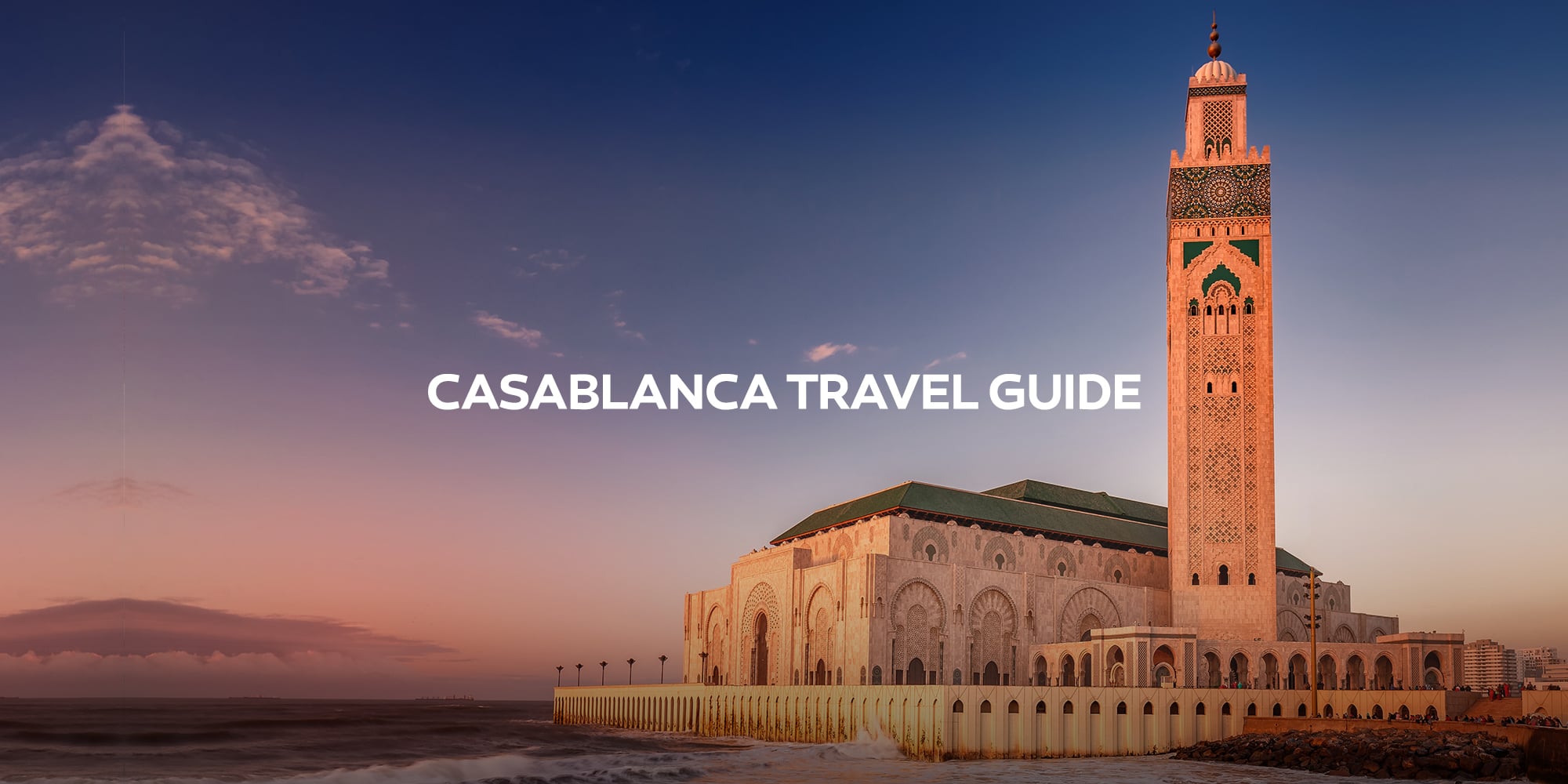
Casablanca Travel Guide

Best things to do & Travel Tips

Casablanca City View

Casablanca is Morocco's largest city, its economic powerhouse, and the first impression the country makes on millions of travellers every year. As home to Royal Air Maroc's Mohammed V International Airport – the country's main international hub – Casablanca is where most journeys to Morocco begin. But it is far more than a transit point. The city rewards those who linger with Art Deco boulevards, a world-class mosque rising from the Atlantic shoreline, a buzzing culinary scene, and a cosmopolitan energy that feels entirely its own.

Casablanca is a city of contrasts: old medina lanes and glass-fronted office towers, traditional Moroccan mint tea and espresso in Art Deco cafés, the call to prayer from the Hassan II Mosque and the bass from a rooftop bar on the Corniche. It is the Morocco of today – modern, ambitious, and deeply proud of its heritage.

Whether you are taking a flight to Casablanca for a night stay or making it the centerpiece of your trip, this guide covers everything you need to know – from top attractions and local experiences to transport, accommodation, food, and the best time to visit. As Morocco's national airline, Royal Air Maroc connects you directly to Casablanca from over 90 countries worldwide.

Top Things to Do in Casablanca

Casablanca offers a wider range of experiences than most first-time visitors expect. Here are the essential things to do in the city, from iconic landmarks to local discoveries.

Hassan II Mosque

The Hassan II Mosque is one of the most magnificent buildings in the world. Built on a promontory jutting into the Atlantic, its 210-metre minaret is the tallest religious structure on Earth. It is one of only two mosques in Morocco open to non-Muslim visitors for guided tours.

La Corniche

Casablanca's Atlantic Corniche is the city's social spine—a sweeping seafront promenade lined with cafés, restaurants, and beach clubs. It is where locals walk, run, and watch the waves. Ideal for a coffee at sunset.

The Old Medina

Smaller and quieter than Marrakech's medina, Casablanca's Old Medina is a place of whitewashed lanes and traditional artisan workshops. Perfect for an agenda-free walk to discover the authentic, lived-in heart of the city.

Quartier Habous

A unique hybrid of French urban planning and Moroccan medina architecture. Habous is the city's premier district for buying leather, ceramics, and traditional sweets like chebakia.

Art Deco Architecture

Casablanca boasts one of the world's finest concentrations of 1930s Art Deco. Explore the 'Mauresque style' buildings around Mers Sultan and Place Mohammed V for a glimpse into the city's distinct modernist history.

Villa des Arts

Housed in a restored Art Deco villa, this institution is Casablanca's premier venue for contemporary Moroccan art. It features rotating exhibitions that highlight both established and emerging regional talent.

Marché Central

A vibrant covered hall showcasing the best of Atlantic seafood. It’s a sensory experience where you can select your own fresh catch and have it prepared immediately in the surrounding restaurants.

Cultural Experiences in Casablanca

Casablanca's cultural life is richer and more varied than its reputation as a business city suggests. These are the experiences that reveal the soul of the city.

🧖‍♂️ Take a hammam

Casablanca has excellent traditional hammams in the Old Medina and upmarket spa versions along the Corniche. Both are deeply Moroccan experiences.

✡️ Explore the Jewish quarter

Casablanca has one of the oldest and most significant Jewish communities in North Africa. The Beth El Synagogue and the nearby Museum of Moroccan Judaism in Casablanca are fascinating and moving institutions.

🏛️ Visit the Museum of Moroccan Judaism

The only museum of Jewish culture in the Arab world, holding a remarkable collection of religious artefacts, photographs, and community history.

⚽ Watch a match at Stade Mohammed V

Football is Casablanca's great civic religion. A match between local rivals Raja and Wydad is one of the most intense sporting experiences in Africa.

🎨 Walk the Mers Sultan neighbourhood

The most atmospheric of the Art Deco districts, best explored on foot on a weekday morning when the cafés are full of locals and the light is on the buildings.

Food & Dining in Casablanca

Casablanca has the most cosmopolitan and varied dining scene in Morocco, a reflection of its position as the country's international gateway. From seafood shacks to rooftop restaurants, the city offers unmatched culinary variety.

🍽️ What to Eat

  • Fresh Atlantic seafood: Grilled fish, prawn tagine, and calamari at the Central Market.
  • Pastilla: A sweet-savoury pastry, often served with a delicious seafood filling.
  • Bissara: Thick fava bean soup, a staple street food breakfast in the Old Medina.
  • Msemen & beghrir: Honeycomb pancakes and flatbreads in the Habous patisseries.
  • Tagine de kefta: The classic meatball and egg tagine, a local neighbourhood favourite.
  • Fresh orange juice: Squeezed at street stalls throughout the city centre.

📍 Where to Eat

  • Central Market (Marché Central): Select your own fresh catch to be cooked on-site.
  • La Corniche: Fashionable strip ranging from beach clubs to upmarket Atlantic-view dining.
  • Quartier Habous: Ideal for traditional tagines, couscous, and fresh-baked pastries.
  • Mers Sultan: Authentic local restaurants and cafés with excellent pricing.
  • Boulevard de la Corniche: A wide range of international cuisine reflecting the city's spirit.

Casablanca by Travel Interest

Casablanca offers something genuinely distinctive for every type of traveller. Here is how to get the most out of the city based on your interests:

🏛️ Cultural Explorer

Hassan II Mosque tour, Old Medina walk, Villa des Arts, Museum of Moroccan Judaism, Quartier Habous architectural stroll.

🥘 Food Lover

Central Market breakfast, Corniche seafood dinner, Habous patisserie, neighbourhood tagine lunch, fresh orange juice trail.

🎨 Architecture Enthusiast

Art Deco tour of Mers Sultan, Place Mohammed V civic buildings, Quartier Habous Mauresque style, Corniche modernist towers.

👨‍👩‍👧‍👦 Family Traveller

Corniche promenade and beach, Hassan II Mosque tour, Ain Diab beach clubs, day trip to Rabat's Chellah gardens.

✨ Luxury Traveller

Corniche five-star hotels, rooftop dining, premium hotel hammam and spa, private architectural tour of Art Deco Casablanca.

⏱️ First-Time Visitor

Hassan II Mosque, Central Market, Corniche walk, Quartier Habous, Old Medina wander—all achievable in two days.

Best Time to Visit Casablanca

Casablanca is one of Morocco's most forgiving cities for year-round travel. The Atlantic Ocean moderates temperatures, preventing extreme heat and keeping winters mild and pleasant.

Season Temp Range What to Expect
Spring (Mar–May) 16–24°C Ideal conditions. Clear skies, comfortable walking weather, manageable crowds.
Summer (Jun–Aug) 22–27°C Warm but comfortable breeze. Beach clubs at their best.
Autumn (Sep–Nov) 17–25°C Excellent. Warm days, cool evenings. Most pleasant season for the Corniche.
Winter (Dec–Feb) 10–17°C Mild and often sunny. Light rain possible. Low season prices, fewer crowds.

Unlike Marrakech or Fes, Casablanca is genuinely enjoyable in every month of the year. If you have flexibility, spring and autumn offer the most consistent conditions, but even January is mild enough for a pleasant Corniche walk and a seafood lunch in the sun.

Getting Around Casablanca

Casablanca is a large city, but its main attractions are relatively well connected and straightforward to navigate for visitors.

🚆 From the Airport

The ONCF express train runs every 30 mins to Casa Voyageurs and Casa Port (45 mins). Official taxis are available—insist on the meter or agree on the fare beforehand.

🚋 Tramway

The most convenient public transport. Lines 1 and 2 connect the city centre, Habous, and the Old Medina. Reliable, air-conditioned, and affordable.

🚕 Petit Taxis

Red taxis for short city trips. Always insist the meter is used. Max 3 passengers.

🚗 Grand Taxis & Apps

Best for day trips or airport transfers. Ride-hailing apps are widely available for a seamless experience.

🚶 On Foot

Centre, Habous, and Medina are highly walkable. For the Corniche, take the tram or taxi to Ain Diab and explore on foot from there.

Frequently Asked Questions

What are the top things to do in Casablanca?

The must-do experiences in Casablanca are: a guided tour of the Hassan II Mosque, walking the Atlantic Corniche, exploring the Quartier Habous, browsing the Old Medina, discovering the Art Deco architecture of Mers Sultan, shopping and eating at the Central Market, and visiting the Villa des Arts for contemporary Moroccan art. For most visitors, two full days are enough to cover the highlights with a relaxed pace.

How many days do I need in Casablanca?

Two full days is a comfortable minimum for seeing Casablanca's main attractions - the Hassan II Mosque, Corniche, Quartier Habous, Old Medina, and Central Market. Three days allows time for a day trip to Rabat or El Jadida and a more leisurely exploration of the Art Deco district. If you are using Casablanca as a base for exploring the Atlantic coast, four to five days works well.

Is Casablanca worth visiting?

Absolutely. Casablanca is frequently underestimated by travellers who treat it purely as a transit point for Marrakech or Fes. The city offers experiences unavailable elsewhere in Morocco - the Hassan II Mosque, the Art Deco architecture, the Central Market seafood, and the Corniche - and a cosmopolitan urban energy that complements rather than duplicates the experience of the imperial cities. Many travellers who give Casablanca a proper visit list it as a highlight of their Morocco trip.

What is Casablanca famous for?

Casablanca is famous for the Hassan II Mosque - one of the world's largest and most beautiful mosques - and the 1942 Humphrey Bogart film that bears the city's name (though it was never actually filmed here). Beyond these headline associations, the city is known for its Art Deco architecture, its Atlantic seafood, its position as Morocco's commercial capital, and its Corniche - one of the finest seafront promenades in North Africa.

What is the best time to visit Casablanca?

Casablanca has a moderate Atlantic climate and is enjoyable year-round. Spring (March to May) and autumn (September to November) offer the most consistent and comfortable conditions for exploring the city. Summer is warm but never hot thanks to the ocean breeze - the beach clubs and Corniche are at their best from June to August. Winter is mild and quiet, with the lowest prices and smallest crowds.

How do I get from Casablanca airport to the city?

The most convenient option is the ONCF airport train, which departs every 30 minutes and reaches the city centre in approximately 45 minutes. Tickets are inexpensive and available at the station inside the terminal building. Official taxis are also available from the rank outside arrivals; agree the fare before departure or confirm the meter is running. The train is strongly recommended for most visitors - it is fast, affordable, and avoids city traffic entirely.

Do I need a visa for Morocco?

Citizens of the European Union, UK, United States, Canada, Australia, and many other countries can enter Morocco visa-free for stays of up to 90 days. A valid passport is required. Always verify the current entry requirements for your nationality with the relevant Moroccan embassy or consulate before travelling, as requirements can change.